For most patients, the answer is no, not in any lasting way. Some people notice a slightly husky or tired voice in the first few weeks while the throat is healing, and it settles on its own. Permanent change is uncommon. The whole point of RABIT is to find and protect the nerves that control the vocal cords.
According to Prof. Dr Sandeep Nayak, an expert in thyroid cancer treatment in India, “The voice nerve is the one structure I never rush. With magnified vision in RABIT, I can see it clearly and work around it, which is exactly why lasting voice problems stay so uncommon.”
Want to know exactly how your voice will be protected during your RABIT surgery?
Why Can the Voice Change After Thyroid Surgery?
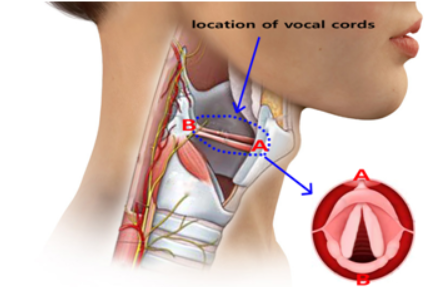
The thyroid sits right beside the nerves that move your vocal cords. Any thyroid operation has to work around them. Once you know where the risk actually comes from, it gets a lot less frightening.
- Nerve proximity: The recurrent laryngeal nerve runs immediately behind the thyroid, and it controls vocal cord movement. Because the nerve sits so close to the gland, the surgeon needs to find it, see it clearly, and stay off it. That part of the surgery is what truly keeps the voice safe.
- Swelling: Sometimes the voice changes even when the nerve was never touched. Normal swelling around the voice box can make speech feel tired or a bit husky for a while. It eases as the tissues heal, usually without any treatment at all.
- Breathing tube: During anaesthesia, a tube rests briefly against the vocal cords. That alone can leave the throat sore or the voice slightly rough for a day or two. It has nothing to do with the surgery itself, and it passes quickly.
- Magnified view: Here is where RABIT genuinely helps. The robotic camera magnifies the nerve many times over, so the surgeon can trace and preserve it with a precision that open surgery struggles to match. Clearer view, safer voice.
Most patients are pleasantly surprised by how well the nerve is preserved, especially with robotic surgery where it stays under constant clear view.
How Long Does a Voice Change Usually Last?
When the voice does change after surgery, the timeline matters more than the change itself. Most cases are short lived and follow a fairly predictable path.
- Early days: Mild hoarseness in the first week is common and expected. Most of the time it is linked to swelling or the anaesthesia tube rather than any nerve injury. It rarely needs treatment.
- Few weeks: For most patients the voice steadily returns to normal within two to six weeks as healing progresses. Staying well hydrated and resting the voice early on genuinely helps.
- Lasting change: Permanent change is uncommon, and when it does happen, it usually points to direct nerve involvement. The magnified RABIT approach is built specifically to avoid that. Even then, voice therapy can restore much of the strength.
- When to call: And if your voice worsens rather than improves, or hasn’t recovered after several weeks, that is worth a prompt review rather than waiting it out. Early assessment almost always leads to a better outcome.
Our blog on RABIT vs conventional thyroidectomy explains how the two techniques differ in protecting the voice nerve.
Why Choose Dr. Sandeep Nayak for Thyroid Cancer Treatment in India?
Dr. Sandeep Nayak brings over two decades of surgical oncology experience, DNB qualifications in Surgical Oncology and General Surgery, and a fellowship in Laparoscopic and Robotic Onco-Surgery to thyroid cancer treatment in India at MACS Clinic and KIMS Hospital, Bangalore. He developed the scarless RABIT robotic thyroidectomy technique now used at select centres worldwide, has performed over 100 robotic thyroidectomies with zero nerve paralysis, and has published more than 25 clinical studies. His magnified, nerve first approach is exactly what keeps lasting voice change so rare in his patients. Clear vision, protected voice. Call +91 9482202240 to book your consultation.
Frequently Asked Questions
Will my voice be permanently damaged after RABIT?
No, permanent voice change is rare because the nerve is carefully protected during surgery.
How soon will my voice return to normal?
Most patients recover their normal voice within two to six weeks after surgery.
Is hoarseness after thyroid surgery normal?
Yes, mild temporary hoarseness from swelling or the breathing tube is common.
Can voice therapy help if my voice changes?
Yes, voice therapy can restore strength and clarity if a change persists.
Reference links:
- National Cancer Institute, Thyroid Cancer Treatment
- National Library of Medicine, Recurrent Laryngeal Nerve and Thyroid Surgery
Disclaimer: The information shared in this content is for educational purposes and not for promotional use.