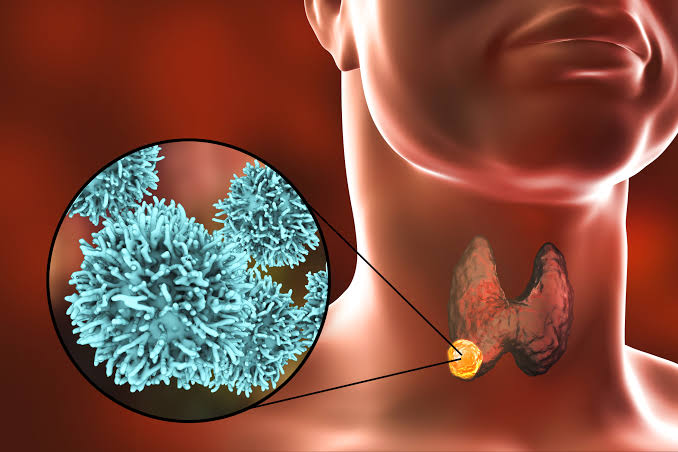
Medullary thyroid cancer (MTC) is a rare form of thyroid cancer that starts in the C cells of the thyroid gland, the cells that make calcitonin, rather than the follicular cells behind most other thyroid cancers. It makes up only 3 to 4 percent of all thyroid cancer cases, but about one in four of those cases is hereditary, tied to a mutation in the RET gene.
According to Prof. Dr. Sandeep Nayak, an expert in thyroid cancer treatment in India, “MTC behaves differently from the thyroid cancers we see most often. It doesn’t respond to radioactive iodine, so getting the surgery right the first time matters more here than almost anywhere else in thyroid oncology.”
Worried about a diagnosis or a family history of MTC?
What Causes Medullary Thyroid Cancer?
Medullary thyroid cancer has a distinct genetic basis that sets it apart from other forms of thyroid cancer, which is why family history is always reviewed carefully during consultation.
- Hereditary RET Mutations: Approximately 25 percent of MTC cases are hereditary, arising from a mutation in the RET proto-oncogene, most often as part of MEN 2 syndrome. Once confirmed, screening is typically extended to first-degree relatives.
- Sporadic Cases: The remaining cases occur without any identifiable family link or genetic mutation, arising independently in the thyroid’s C cells.
- Age and Gender Distribution: Sporadic MTC most commonly presents in adults between 40 and 60 years of age, with a slightly higher incidence in women.
- MEN 2 Syndrome: Patients diagnosed with MEN 2A or MEN 2B carry a significantly elevated lifetime risk of MTC alongside other endocrine tumors, making early genetic counseling essential.
Because MTC frequently occurs alongside other endocrine conditions, evaluation typically extends beyond the neck to assess overall endocrine health. Radiation exposure, a known risk factor in other thyroid cancers, plays a comparatively minor role in MTC. Identifying the underlying cause is central to shaping an appropriate treatment plan from the outset.
What Does Diagnosis and Treatment Involve?
Once MTC is suspected, timely evaluation is critical, as early diagnosis directly influences treatment outcomes.
- Blood Markers: Elevated calcitonin and CEA (carcinoembryonic antigen) levels are the primary laboratory indicators used both for diagnosis and for long-term monitoring.
- Imaging and Biopsy: Neck ultrasound is used to identify suspicious nodules, followed by fine-needle aspiration biopsy, which may include calcitonin testing of the sample to confirm MTC prior to surgery.
- Surgical Management: Total thyroidectomy remains the primary treatment, often combined with removal of adjacent lymph nodes when there is evidence of regional spread.
- Genetic Testing: RET gene testing is recommended for both the patient and immediate family members, allowing early identification of at-risk relatives and, where appropriate, preventive surgery before disease onset.
The overall approach from suspicion to definitive treatment is designed to be efficient, given the importance of early intervention in MTC. For further detail on how this condition compares with the more common form of thyroid cancer, refer to our blog on papillary vs. medullary thyroid cancer.
Why Choose Dr. Sandeep Nayak for Medullary Thyroid Cancer Treatment
Dr. Sandeep Nayak brings 24 years of surgical oncology experience, along with a fellowship in laparoscopic and robotic onco-surgery, to the management of medullary thyroid cancer at MACS Clinic and KIMS Hospital, Bangalore. He is the developer of the RABIT scarless robotic thyroidectomy technique and has performed over 100 robotic thyroidectomies with zero recorded cases of nerve paralysis. He currently heads Oncology Services across Karnataka, overseeing surgical oncology care at a state level.
Patients diagnosed with MTC, or families with a confirmed RET mutation, are evaluated with same-day calcitonin testing and referred for genetic counseling where clinically indicated, ensuring both patients and at-risk relatives receive timely guidance.
To book a consultation, call +91 9482202240.
Frequently Asked Questions
How many hospital visits does MTC treatment usually take?
One visit usually covers evaluation and biopsy. Surgery means a separate admission, and after that, follow-ups get spaced out to every few months.
How long before results from calcitonin testing come back?
Calcitonin and CEA come back within a few days. RET mutation testing takes longer, closer to one or two weeks.
Is medullary thyroid cancer safe to treat surgically?
It is, provided the surgeon has real experience with it. Total thyroidectomy for MTC has a low complication rate and is still the treatment that works best.
Does insurance cover MTC treatment in India?
Most major insurance plans cover thyroidectomy and related hospitalization; the clinic’s team can help verify coverage before admission.
Refrence :
1.National Cancer Institute (cancer.gov) – Overview covering how medullary thyroid cancer begins in the thyroid cells that produce calcitonin and why radioactive iodine is not effective for these cancers.
2.NCBI StatPearls – A clinical reference covering MTC’s origin from parafollicular C cells, its sporadic versus hereditary forms including MEN 2A, MEN 2B, and FMTC, and standard treatment through total thyroidectomy with lymph node dissection.
Disclaimer: This content is for informational purposes only and does not replace a consultation with a qualified physician.