
Radioiodine-refractory thyroid cancer is thyroid cancer that doesn’t “take” radioactive iodine, or never does, so the treatment isn’t effective. It rarely occurs (only about 5-15% of people with differentiated thyroid cancer). It does not mean that treatment ends. It can involve a change to other treatment options, like careful monitoring, surgery, local treatment or targeted tablets.
According to Dr. Sandeep Nayak, a Thyroid Surgeon in Bangalore, “Hearing that iodine has stopped working is frightening, but it is a change of strategy, not the end of treatment. We first ask whether the disease needs treating right now at all, because many of these cancers grow slowly. When it does, we have surgery, targeted tablets and other options to choose from.”
Make a decision about radioiodine-refractory thyroid cancer and next treatment options. Consult a thyroid expert and ask today!
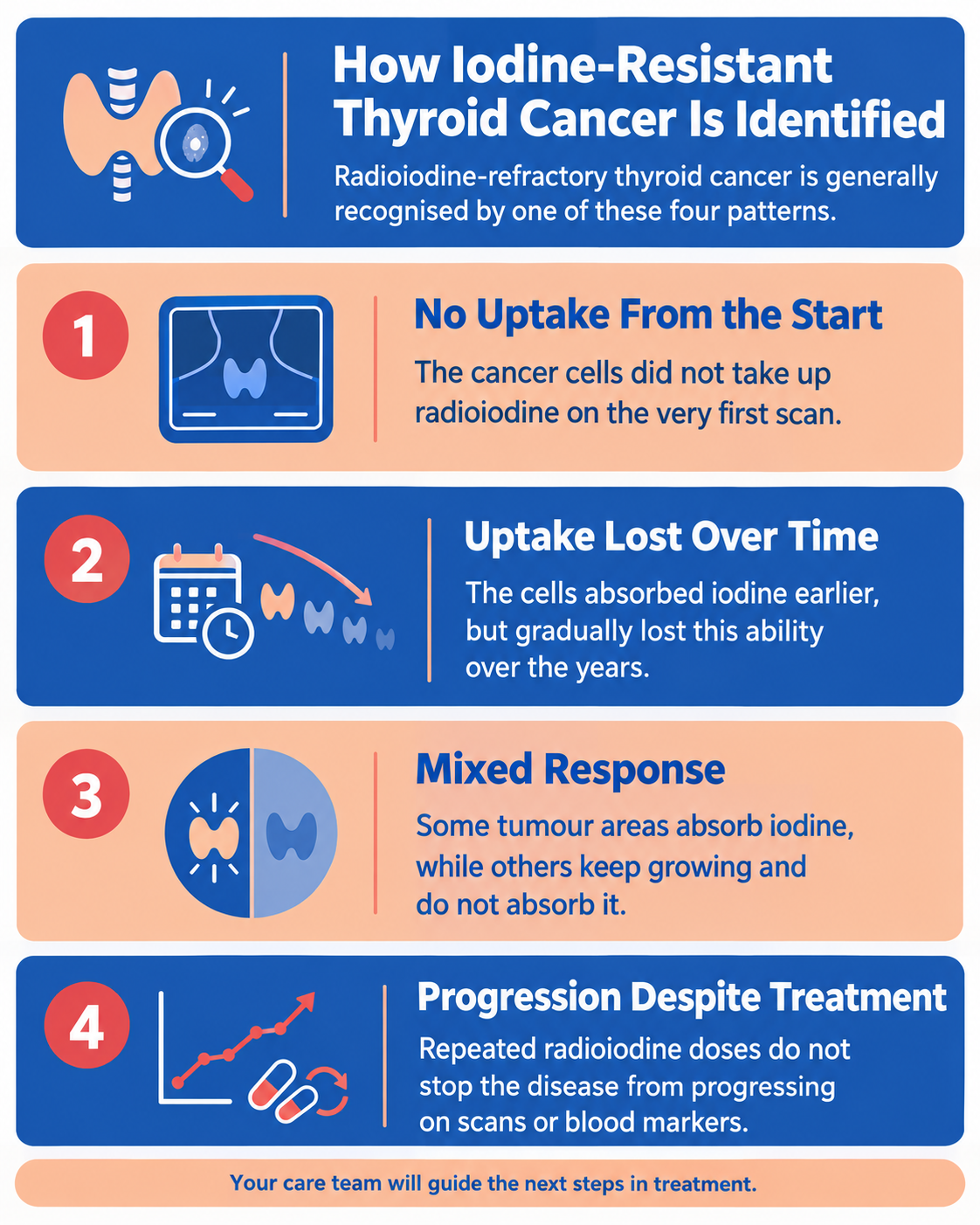
What makes Thyroid Cancer Radioiodine-Refractory.
To see why iodine normally works so well in thyroid cancer, read our page on radioactive iodine therapy.
What is the next step in the treatment of iodine resistant thyroid cancer?

Surgery remains the foundation of thyroid cancer care, and our treatment overview shows how each option fits together.
How to decide on the appropriate treatment method?
Medications are not begun due to iodine’s failure to work. They look at:
- The rate of disease development (as compared to scans taken at different times)
- Nerves or other important tissues or organs may be involved, either causing symptoms or lying near the windpipe.
- Genetic alterations in the tumour which can open up targeted opportunities.
- The general health and ability to cope with the side effects of the drug.
- Your own priorities such as quality of life
- Maintain TSH in target range as set by your team with continued thyroid hormone treatment
Frequently Asked Questions
Radioiodine-refractory does not mean that the cancer cannot be treated?
No. It is a sign that radioactive iodine is not the proper treatment. Surgery, radiotherapy, local ablation and tablets directed to the area of the bone can still deal with the condition, and numerous individuals can live for years with excellent monitoring and therapy.
Do I need drug treatment as soon as my cancer becomes iodine resistant?
Not always. Doctors may opt for periodic scans and blood tests before surgery if the disease is small, not showing symptoms and growing slowly. Treatment for the disease is generally initiated when the disease progresses or is starting to cause issues
What are the methods of diagnosing resistant thyroid cancer?
Your scan history, to see if the disease absorbs radioiodine, how it has responded to previous doses, and tests like thyroglobulin levels and imaging. The treating team, not a single test makes the decision.
How common is radioiodine-refractory thyroid cancer?
It is uncommon. The various published reviews estimate that about 5 to 15 percent of people with differentiated thyroid cancer develop this cancer.
References
- Treatment strategies for radioactive iodine-refractory differentiated thyroid cancer (NCBI/PMC)
- 2019 European Thyroid Association guidelines for advanced radioiodine-refractory thyroid cancer (NCBI/PMC)
Disclaimer
This article is for general education and is not a substitute for medical advice, diagnosis or treatment. Do not start, stop or change any medicine without consulting your doctor.