
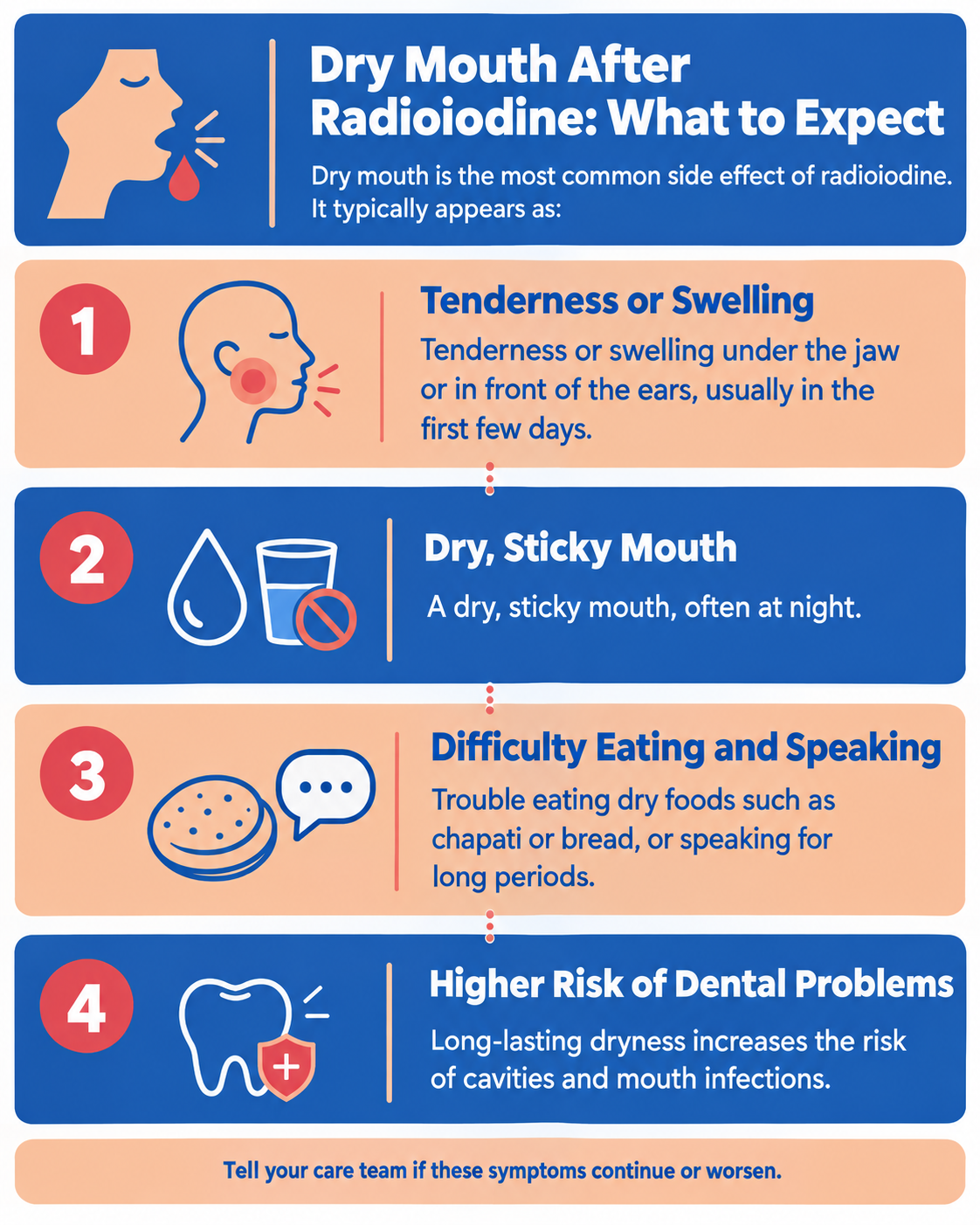
Radiation from the radioiodine is not uncommon and can cause a dry mouth, a metallic or a flat taste or tender, swollen glands under the jaw or in front of the ears. The salivary glands are very susceptible to the uptake of iodine and consequently, the side effects of radioactive iodine are most severe in the salivary glands. Dry mouth is reported in about 11-44% of patients and is generally improved within weeks to months.
According to Dr. Sandeep Nayak,a Thyroid Surgeon in Bangalore, “Dry mouth and a metallic taste worry patients far more than they should, because in most people these settle with time. What matters is that we explain them before treatment, keep the dose matched to the real risk of the cancer, and ask patients to stay hydrated and look after their mouth and teeth.”
If you have concerns about dry mouth or taste changes when you are preparing for radioiodine treatment, Consult with a thyroid specialist and ask the questions now!
Salivary Gland Problems and Dry Mouth After Radioiodine
If you take thyroxine after your gland was removed, the TSH target is set with your surgeon, and our treatment overview explains how that follow-up is planned.
Taste Change After RAI and Other Short-Term Effects

Radioiodine is only one part of care after surgery, so our treatment overview shows how it fits in with the rest of the plan.
What Determines How Radioiodine Side Effects Affect You?
Even two people with the same treatment can have a different experience. The main factors are:
- The administered dose due to the enhanced effects of higher and repeated doses of the medication on saliva
Your age, and any medicine that causes dry mouth. - How well you stay hydrated and keep up oral care around the treatment
- Whether radioiodine is truly necessary (many low risk cancers may not need radioiodine),
- After your nuclear medicine team’s recommendations regarding gum, sweets and rinsing (when to begin)
Frequently Asked Questions
Are salivary gland side effects of radioiodine permanent?
The swelling, tenderness and dry mouth caused by the salivary glands are temporary and will improve over time. Dryness or alteration of taste may be more persistent in a fewer number of individuals, particularly following a higher or repeated dose.
How long does a taste change after radioiodine last?
A metallic, bitter or dull taste is typically observed during the first days to weeks, and resolves over weeks to months. If it doesn’t go away, discuss with your healthcare workers.
What can I do to decrease dry mouth after radioiodine?
Drinking water, good oral hygiene and parents being guided by your nuclear medicine team in choosing sugar-free gum or sweets will help. Consult with team when to begin; timing directions may vary.
When can I see my doctor after radioiodine?
If the swelling of the glands continues to increase or causes fever, pain, difficulty swallowing, or breathing problems, contact your doctor immediately. If the changes in taste and the dry mouth do not get better over time, contact your doctor.
References
- Review: salivary gland side effects of radioiodine therapy (NCBI/PMC)
- Radioiodine therapy (MedlinePlus, NIH)
Disclaimer
This article is for general education and is not a substitute for medical advice, diagnosis or treatment. Do not start, stop or change any medicine without consulting your doctor.