When thyroid cancer treatment involves radioactive iodine therapy, diet becomes a direct part of the treatment plan. Not a side note. Not optional. A low-iodine diet in the weeks before the procedure helps the body absorb radioactive iodine as effectively as possible, which directly affects how well the therapy works.
Dr. Sandeep Nayak explains that patients frequently underestimate the importance of dietary preparation, yet it is one of the most controllable factors in determining treatment response. He stresses that adherence to the full prescribed duration is as clinically significant as the therapy itself.
Dr. Sandeep Nayak is a distinguished surgical oncologist in India with specialized expertise in thyroid cancer surgery and treatment. Having guided a large number of patients through thyroid cancer care, including preparation for radioactive iodine therapy, he brings both clinical precision and clear patient communication to every stage of the journey. For those seeking the best cancer treatment in Bangalore, his practice offers comprehensive thyroid cancer management from surgery through to post-treatment recovery.
Let’s get into it.
Why a Low-Iodine Diet Is Needed Before Radioactive Iodine Therapy
Here’s the science behind why this diet matters so much.

Radioactive iodine therapy, also called RAI or I-131 treatment, is commonly used after thyroid surgery to destroy any remaining thyroid tissue or thyroid cancer cells. The therapy works because thyroid cells selectively absorb iodine. No other cells in the body do this in the same way.
The problem is that when the body has normal iodine levels from food, the thyroid cells are already partially satisfied. They absorb less of the radioactive iodine dose, reducing the treatment’s effectiveness. A low-iodine diet addresses this by depleting the body’s iodine stores over 1 to 2 weeks. The thyroid cells become iodine-starved and absorb the radioactive dose far more aggressively when it is administered.
In short, the low-iodine diet is not about general health. It is a preparation step that directly improves the effectiveness of radioactive iodine therapy. Following it carefully is one of the simplest and most important things a patient can do to support their treatment outcome.
Foods to Eat and Foods to Avoid on a Low-Iodine Diet
Knowing exactly what is on and off the table makes this much easier to manage.
Foods to eat freely:
* Fresh fruits and vegetables, except for those noted below
* Nuts and nut butters (not salty)
* Fresh, unprocessed meats such as chicken, lamb, and beef
* Egg whites (not the yolk)
* Grains, rice, oats, and pasta without iodized salt or additives
* Vegetable oils
* Handmade bread not made with dairy or iodized salt
* Herbal teas, black coffee, and water
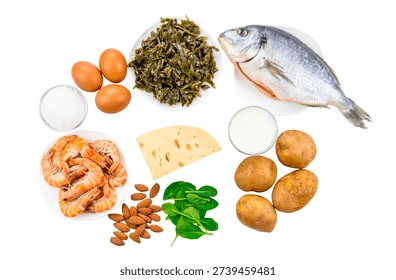
Foods to avoid for thyroid when on a low-iodine diet:
- Iodized salt and any food containing it
- All seafoods, including fish, shellfish, seaweed, and sushi
- Foods containing milk, dairy products, cheese, butter, yogurt, ice cream
- Egg yolks and whole eggs
- Foods that have been processed or packaged but don’t specify the amount of salt in the ingredients
- Soy products: soy sauce, tofu, edamame, soy milk
- Restaurant meals where ingredient control is not feasible.
- Red dye number 3 (erythrosine), found in some food colorings
There are some Indian-specific points worth noting:
This period requires close attention to many everyday cooking staples used in Indian cooking. Iodized salt is added to packaged masalas and spice mixes, so they should be avoided. Milk-based chai is on the “no” list. Curd, paneer, and most commercial rotis should be avoided. One of the most beneficial changes is to use non-iodized salt, or sendha namak, for home cooking.
There are ways to eat an iodine-free diet without it being bland or low in volume. Eating can be satisfying with the right substitutions.
Not sure whether a specific food is safe during your low-iodine diet? Connect with a specialist for a personalized dietary guide before your RAI treatment.
How Long to Follow the Low-Iodine Diet Before and After RAI
Timing this correctly is just as important as what you eat.
- Before RAI therapy
Most doctors recommend following a strict low-iodine diet for one to two weeks before the radioactive iodine therapy dose. Some centers advise starting two weeks out; others one week, depending on the patient’s iodine levels and the treating team’s protocol.
- After RAI therapy
The diet needs to continue for one to two days after the radioactive iodine dose is administered. After this window, normal eating can usually resume. The exact duration is confirmed by the treating specialist based on the dose given and the patient’s response.
A word on iodine from other sources:
Some patients unknowingly consume iodine through medications, contrast dyes used in CT scans, or supplements. Any CT scan with iodinated contrast, iodine-containing vitamins, or amiodarone medication in the months before RAI can interfere with the treatment. These must be flagged to the treating team well in advance.
Their doctor sets the specific timeline for each patient. Sticking to the prescribed window, rather than cutting it short, makes a meaningful difference in treatment effectiveness.
People follow the diet with good intentions and still miss things. Here is what to watch for.
Common Mistakes to Avoid on a Low-Iodine Diet

- Using iodized salt without realizing it. In most Indian kitchens, table salt is iodized. Switching to non-iodized rock salt or sendha namak is an easy fix.
- Eating out. Restaurant kitchens routinely use iodized salt and dairy. Even a simple dal or vegetable dish outside the home is risky during this period.
- Assuming all packaged foods are safe. Many biscuits, breads, cereals, and snacks contain iodized salt or dairy derivatives.
- Forgetting about supplements. Multivitamins, especially prenatal vitamins, often contain iodine. All supplements should be paused unless a doctor advises otherwise.
- Skipping the diet for too short a period and starting the diet just two or three days before RAI is not enough. A full one to two weeks is needed to deplete iodine stores adequately.
- Eating egg yolks. Egg whites are allowed; yolks are not. This catches many patients off guard.
- Consuming soy products. Soy interferes with iodine metabolism and should be avoided entirely during the diet period.
A careful reading of every label and honest communication with the treating team help avoid most of these pitfalls.
Not sure what a full day of eating actually looks like? Here is a practical example.
Sample One-Day Low-Iodine Diet Meal Plan

- Early morning: Black coffee or herbal tea, no milk.
- Breakfast: Cook oats in water with fresh fruit, seasoned with non-iodized salt. Or plain poha made with oil and vegetables, seasoned with sendha namak.
- Mid-morning: A handful of unsalted walnuts or almonds. Fresh fruit.
- Lunch: Plain rice or roti made without dairy or iodized salt. Dal or a simple vegetable sabzi cooked with non-iodized salt and fresh spices. No packaged masala mixes.
- Evening snack: Homemade popcorn popped in vegetable oil, seasoned with non-iodized salt. Fresh fruit juice without added color.
- Dinner: Grilled chicken or lamb, seasoned simply with non-iodized salt and fresh herbs. Steamed or stir-fried vegetables. Plain rice or roti.
- Throughout the day: Plenty of plain water. Herbal teas without milk.
This is a starting point. Portions can be adjusted to individual needs, and variety can be added from the permitted foods list.
Want a meal plan tailored to your specific treatment protocol? Speak to your care team before starting your low-iodine diet.
Frequently Asked Questions
1. How long before radioactive iodine should I start a low-iodine diet?
Most doctors recommend starting one to two weeks before the RAI dose. The exact timeline depends on your protocol and should be confirmed with your treating specialist.
2. Can I eat eggs on a low-iodine diet?
Egg whites are allowed, but egg yolks must be avoided. Yolks contain iodine and can interfere with the diet’s effectiveness.
3. Is iodized salt allowed during a low-iodine diet?
No. Iodized salt must be avoided entirely. Use non-iodized rock salt or sendha namak as a substitute during this period.
4. What happens if I don't follow the low-iodine diet properly?
If the body retains normal iodine levels, the thyroid cells absorb less radioactive iodine, reducing the treatment’s effectiveness. Proper adherence directly supports a better outcome.
5. Can I drink tea and coffee on a low-iodine diet?
Black coffee and herbal teas are fine. Regular tea or coffee made with milk must be avoided, as dairy is a significant source of iodine.
Reference links:
https://www.cancer.org/cancer/types/thyroid-cancer/after-treatment/follow-up.html
Disclaimer: The information shared in this content is for educational purposes and not for promotional use.