Why Are More People Being Diagnosed With Thyroid Cancer?
This does not necessarily mean that thyroid cancer has suddenly become much more aggressive or common in everyone.
A major reason is that we are finding small thyroid cancers more frequently than before due to regular health check-ups and awareness among people.
Understanding Thyroid Nodules
The thyroid is a small, butterfly-shaped gland in the neck. Nodules, or small lumps, are common, especially in adults.
With the widespread use of ultrasound, CT scans, MRI scans, and health check-ups, many thyroid nodules are detected incidentally—often when imaging is performed for an unrelated problem.
Some of these nodules are very small and may never have caused symptoms during a person’s lifetime.
How Improved Imaging Helps Detect Thyroid Nodules
Improved ultrasound technology has also made it easier to identify suspicious features in thyroid nodules.
When necessary, doctors may recommend a fine-needle aspiration biopsy to determine whether a nodule is benign or cancerous.
Concerned about a thyroid nodule or neck swelling? Get expert evaluation today.
Increased Awareness and Earlier Evaluation
Increased awareness among patients and healthcare professionals has further encouraged people to seek evaluation for neck swellings, voice changes, difficulty swallowing, or enlarged lymph nodes.
Does Every Thyroid Cancer Need Extensive Treatment?
However, increased diagnosis does not always mean that every patient needs extensive treatment.
Some small, low-risk thyroid cancers can be managed with active surveillance, while others may require surgery, radioactive iodine, or additional treatment depending on their size, type, stage, and risk features.
It is also important to remember that most thyroid nodules are not cancer.
When Should You See a Doctor?
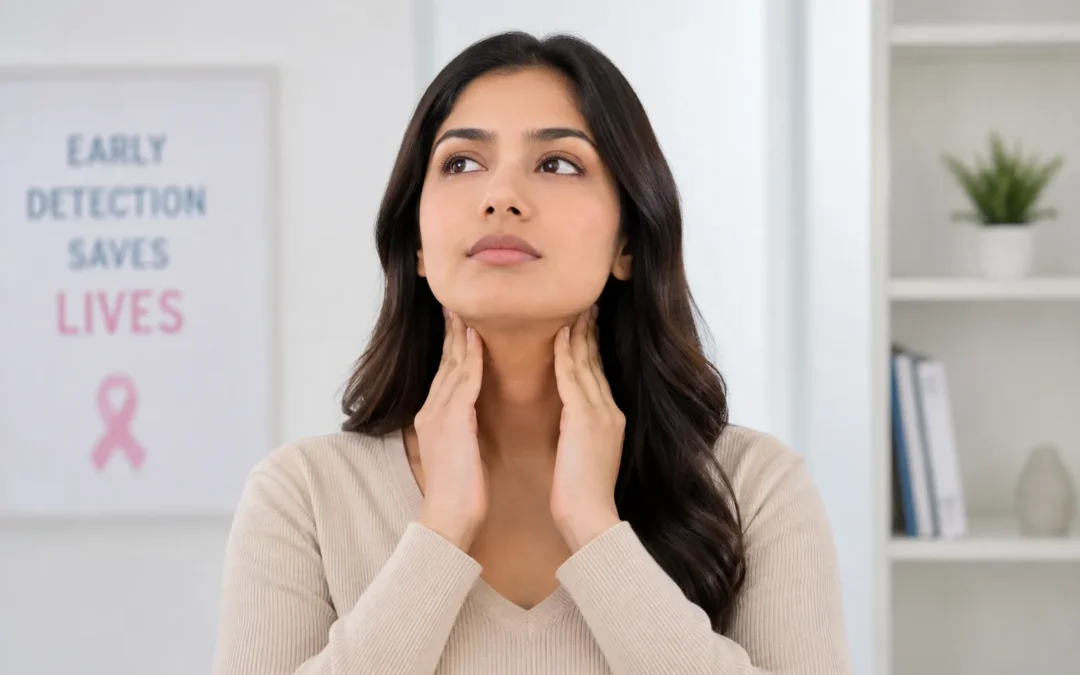
A neck lump should not be ignored, but it should not automatically cause panic either.
Proper evaluation by a qualified clinician helps distinguish harmless nodules from those requiring treatment.
Have questions about thyroid cancer diagnosis or treatment? Speak with a specialist.
The Key Message
The key message is simple: better detection has contributed significantly to the rise in thyroid cancer diagnoses.
The goal of modern thyroid care is not only to detect cancer early, but also to provide the right treatment for the right patient—without unnecessary intervention.
FAQ Section
1. Why are more people being diagnosed with thyroid cancer these days?
Largely because of increased use of ultrasound, CT, and MRI scans, along with greater health awareness. These often detect small thyroid nodules incidentally, even when a person has no symptoms — not because the disease itself has become more common or aggressive.
2. Does having a thyroid nodule mean I have cancer?
No. Thyroid nodules are very common, especially in adults, and the vast majority are benign. Only some nodules show suspicious features on imaging that warrant further testing, such as a fine-needle aspiration biopsy.
3. If I'm diagnosed with thyroid cancer, will I definitely need surgery?
Not necessarily. Treatment depends on the size, type, stage, and risk features of the cancer. Some small, low-risk cases can be managed with active surveillance, while others may need surgery, radioactive iodine, or additional treatment.
4. What symptoms should prompt me to see a doctor about my thyroid?
Watch for a neck lump or swelling, voice changes, difficulty swallowing, or enlarged lymph nodes. These shouldn’t be ignored, but they also shouldn’t cause panic — a qualified clinician can properly evaluate whether further testing is needed.
5. Is finding more thyroid cancer cases actually a bad thing?
Not inherently. It largely reflects better detection tools and awareness. The real focus of modern thyroid care is providing the right treatment for the right patient — avoiding unnecessary intervention while still catching cancers that genuinely need treatment.