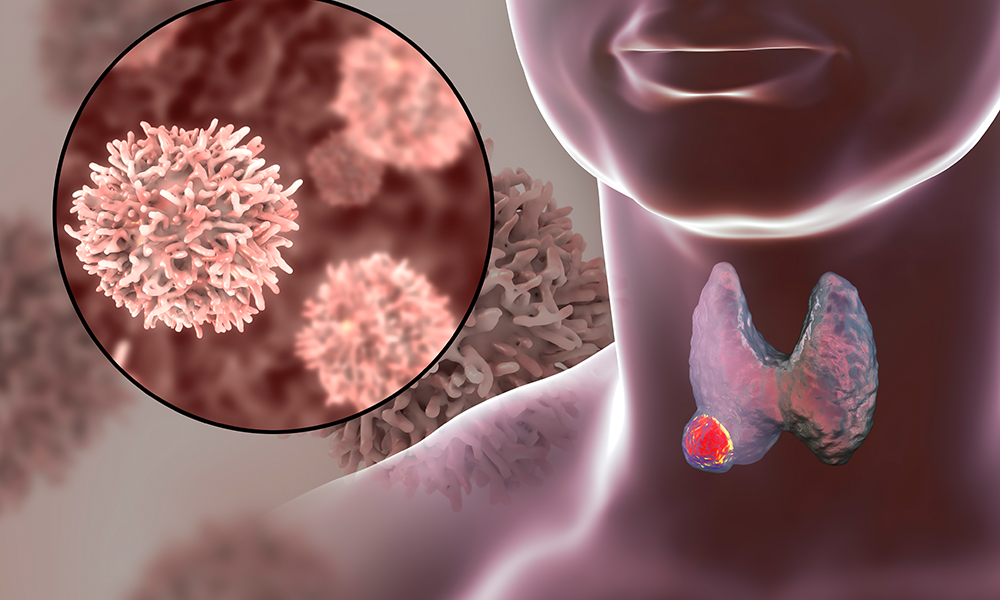
Solid, hypoechoic nodules with irregular margins or microcalcifications on ultrasound carry a meaningfully higher cancer risk than smooth, fluid-filled ones, even though most thyroid nodules, over 90 percent, turn out to be benign. Size alone doesn’t predict malignancy the way people assume. A nodule can be small and dangerous or large and completely harmless. What matters more is a specific set of ultrasound features, growth pattern, and biopsy results taken together, and roughly 5 to 10 percent of all nodules end up cancerous once that full picture is checked.
According to Prof. Dr. Sandeep Nayak, a specialist in thyroid cancer treatment in India, “A nodule’s size tells you almost nothing on its own. It’s the shape, the borders, and how it behaves on biopsy that actually separate a cyst from a cancer.”
Found a nodule during a routine scan or checkup?
Which Ultrasound Features Raise Suspicion?
Not every nodule needs the same level of concern, and ultrasound is usually the first tool that separates the ones worth watching from the ones worth biopsying.
- Hypoechoic Pattern: A nodule that appears darker than the surrounding thyroid tissue, especially when solid rather than fluid-filled, gets flagged for biopsy far more often than one that looks bright or spongy on the scan.
- Microcalcifications: Tiny white specks scattered through a nodule are one of the stronger warning signs on imaging, and they show up frequently in papillary thyroid cancer specifically.
- Irregular Margins: Borders that look blurred, spiculated, or poorly defined instead of smooth carry more weight than size when a radiologist decides whether to recommend a needle biopsy.
- Taller-Than-Wide Shape: A nodule measuring taller than it is wide on a transverse scan is an unusual growth pattern for benign tissue, and it tends to push a case toward further testing.
None of these features alone confirms cancer, but stacking two or three of them together is usually what moves a nodule from watch-and-wait to biopsy. For nodules that clear this threshold, fine-needle aspiration biopsy becomes the next step before any surgical decision gets made.
What Other Factors Push the Risk Higher?
Beyond what shows up on a scan, a handful of patient-specific and biopsy-based factors shift the odds further.
- Cold Nodules: Nodules that don’t absorb iodine on a radioactive scan, called cold nodules, carry a higher cancer risk than hot nodules, which almost never turn out malignant.
- Indeterminate Cytology: When a biopsy comes back indeterminate rather than clearly benign or malignant, the malignancy risk still ranges anywhere from 5 to 30 percent depending on the specific category.
- Patient Factors: A nodule in a man, a child, or anyone with a history of childhood neck radiation carries more suspicion than an identical-looking nodule in an otherwise low-risk adult woman.
- Rapid Growth: A nodule that grows noticeably over a few months, especially alongside a new hoarse voice or a hard, fixed lump, gets treated as urgent regardless of its ultrasound score.
Put together, these factors are why two nodules that look nearly identical on a scan can end up with completely different treatment plans. Patients often ask next about why thyroid cancer is being diagnosed more often, and incidental nodule detection is a big part of that answer.
Why Choose Dr. Sandeep Nayak for Thyroid Nodule Evaluation
Dr. Sandeep Nayak has evaluated thousands of thyroid nodules across more than two decades of surgical oncology practice, using ultrasound risk stratification to decide which nodules genuinely need a biopsy instead of routine monitoring. Cases that do need surgery are handled with the RABIT technique, keeping the neck free of visible scarring even when a nodule turns out to be malignant.
Patients get a same-day ultrasound reading rather than a wait-and-wonder callback, and that matters when a nodule’s features determine whether biopsy happens that week or six months from now.
Frequently Asked Questions
Are solid thyroid nodules more likely to be cancer than cystic ones?
Yes, solid nodules carry a higher malignancy risk than purely fluid-filled cystic ones.
Does nodule size predict cancer risk?
Not reliably, ultrasound features and biopsy results matter more than size.
Are cold nodules always cancerous?
No, but cold nodules carry more cancer risk than hot, iodine-absorbing nodules.
Can an indeterminate biopsy result still mean cancer?
Yes, indeterminate results carry roughly a 5 to 30 percent malignancy risk.
References:
- American Academy of Family Physicians Review of thyroid nodule evaluation, ultrasound risk stratification, and molecular testing for indeterminate cytology:
- NCBI (PMC) Overview of indeterminate thyroid nodules, TI-RADS ultrasound features, and Bethesda cytology categories:
Disclaimer: This content is for informational purposes only and does not replace a consultation with a qualified physician.